
Echo of the Dahlia
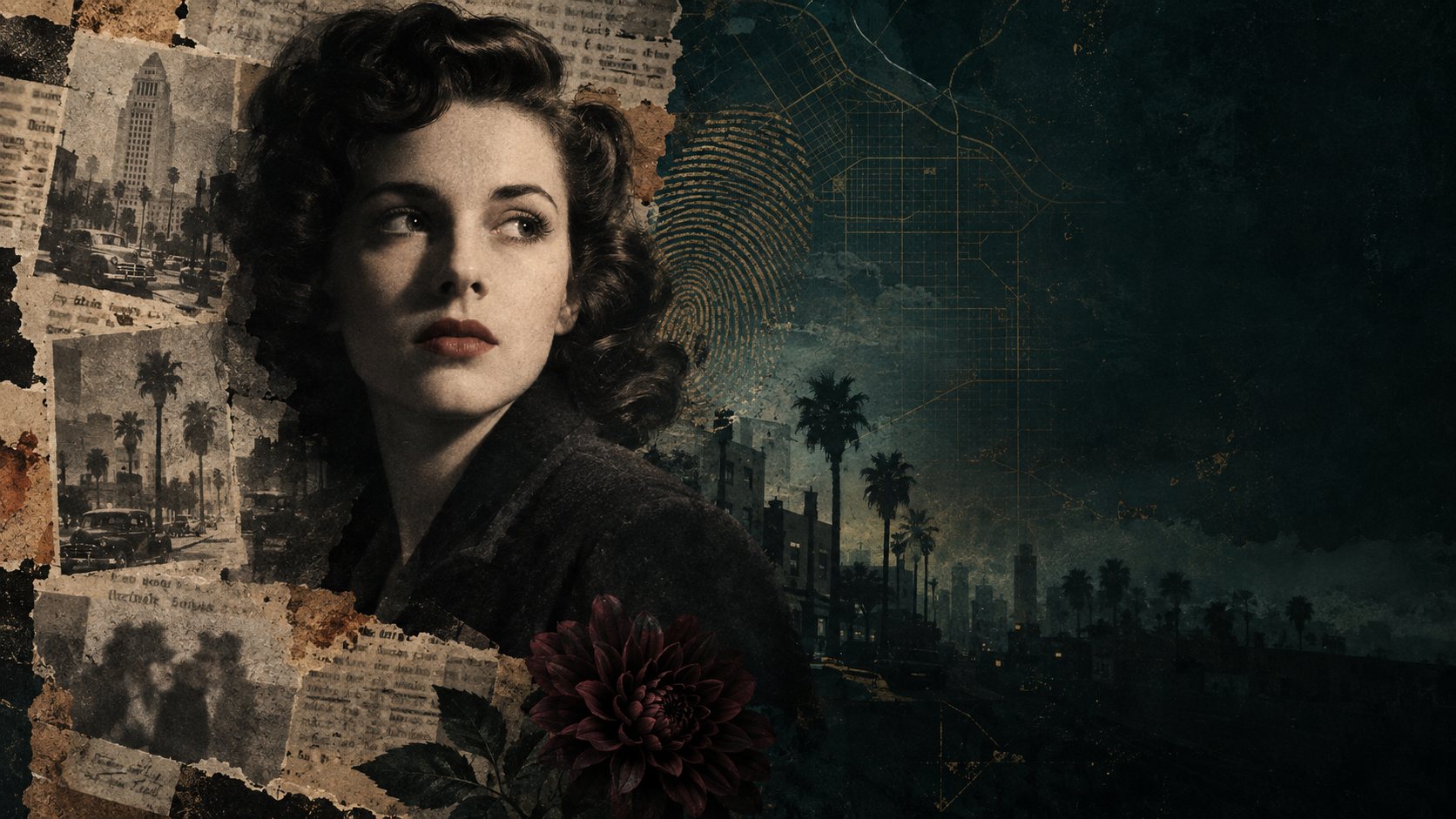
Echo of the Dahlia
Elizabeth Short was twenty-two when her body was discovered in Los Angeles on January 15, 1947. LAPD led the investigation and the FBI assisted. No one was charged, and the homicide remains unsolved.
The name that survived was not the name she lived under. The press turned Elizabeth Short into the Black Dahlia, a nickname that blended contemporary film culture with an image of glamour and secrecy.
This file calls her Elizabeth Short before calling her the Dahlia.
Born in Massachusetts in 1924, Short moved between the East Coast, Florida, and California. Federal fingerprint records from Camp Cooke and a 1943 Santa Barbara arrest allowed the FBI to identify her rapidly after her death.
The record does not establish that she was a sex worker, pregnant, or defined by the rumors later attached to her.
Short was killed elsewhere and placed in an undeveloped lot. LAPD pursued an enormous volume of leads while the FBI ran records checks, interviews, and fingerprint comparisons. Prints recovered from an anonymous communication produced no match in FBI files.
The location of the killing, the identity of the person who transported her, and the authorship of every attributed communication remain unknown.
Documented: fingerprint identification, LAPD leadership, FBI assistance, nationwide checks, and no official solution.
Plausible: the offender had practical anatomical knowledge.
Speculative: a single named suspect has solved the case, an institutional cover-up protected the offender, or similar regional murders prove one killer.
The murders of Georgette Bauerdorf, Jeanne French, Evelyn Winters, and the Cleveland Torso cases deserve comparison because investigators and later researchers considered possible links. The public evidence does not establish common authorship.
The crime was designed to be seen. The nickname ensured it would be repeated. Somewhere between those two acts, Elizabeth Short began to disappear.
The echo is not only the unsolved murder. It is the way the same story keeps returning with a new man placed at its center. This file keeps Elizabeth there instead.
Elizabeth Short is born in Hyde Park, Massachusetts.
She applies for civilian work at Camp Cooke, California. Her fingerprints enter federal files.
Santa Barbara police arrest her for underage drinking. A second fingerprint record and photograph are created.
Major Matthew Gordon Jr., a man Short reportedly expected to marry dies in an aircraft crash.
Short returns to Southern California and spends much of the next six months in the Los Angeles area.
Robert Manley leaves Short at the Biltmore Hotel in downtown Los Angeles. This is the last broadly accepted sighting.
Her body is discovered near 39th Street and Norton Avenue. The FBI identifies her from fingerprints within fifty-six minutes of receiving them.
The LAPD investigation expands. The FBI conducts record checks and interviews and examines prints from a possible killer communication.
Numerous confessions and suspect claims are investigated or publicized. No prosecution follows.
The homicide remains officially unsolved.
- Primary documentary anchor Federal Bureau of Investigation. Black Dahlia case history. Open source
- Released federal records FBI Vault. Black Dahlia Elizabeth Short files. Open source
- Municipal record City of Los Angeles public records release. Elizabeth Short Black Dahlia Previously Released Records. Open source
- Contemporary reporting Los Angeles Times and Los Angeles Examiner coverage from January through March 1947. Use contemporary articles as evidence of reporting and public reaction, not as automatically verified fact. Open source
- Documentary audit Larry Harnisch. The Daily Mirror and Black Dahlia research archive. Useful for tracing newspaper claims, source conflicts, and later suspect narratives. Open source
- Book reference Michael Newton. The Encyclopedia of Unsolved Crimes. Check quoted autopsy material against the available official record. Open source
- Theory source Steve Hodel. Black Dahlia Avenger. Treat as an argued suspect theory, not an official solution. Open source
- Cultural interpretation James Ellroy. The Black Dahlia. A work of fiction valuable for cultural impact, not case evidence. Open source
Case Status
Open — offender unidentified — legend audit continues