THE LIVING RECORD
THE IT FILE
The patterns emerge between the points
STREATOR TORNADO · MEDIA LANGUAGE · SURVIVAL · STRUCTURAL REDUCTION
Footnote Women
A tornado. A collapsed home. A woman still visible in the record, but made smaller by the story around her.
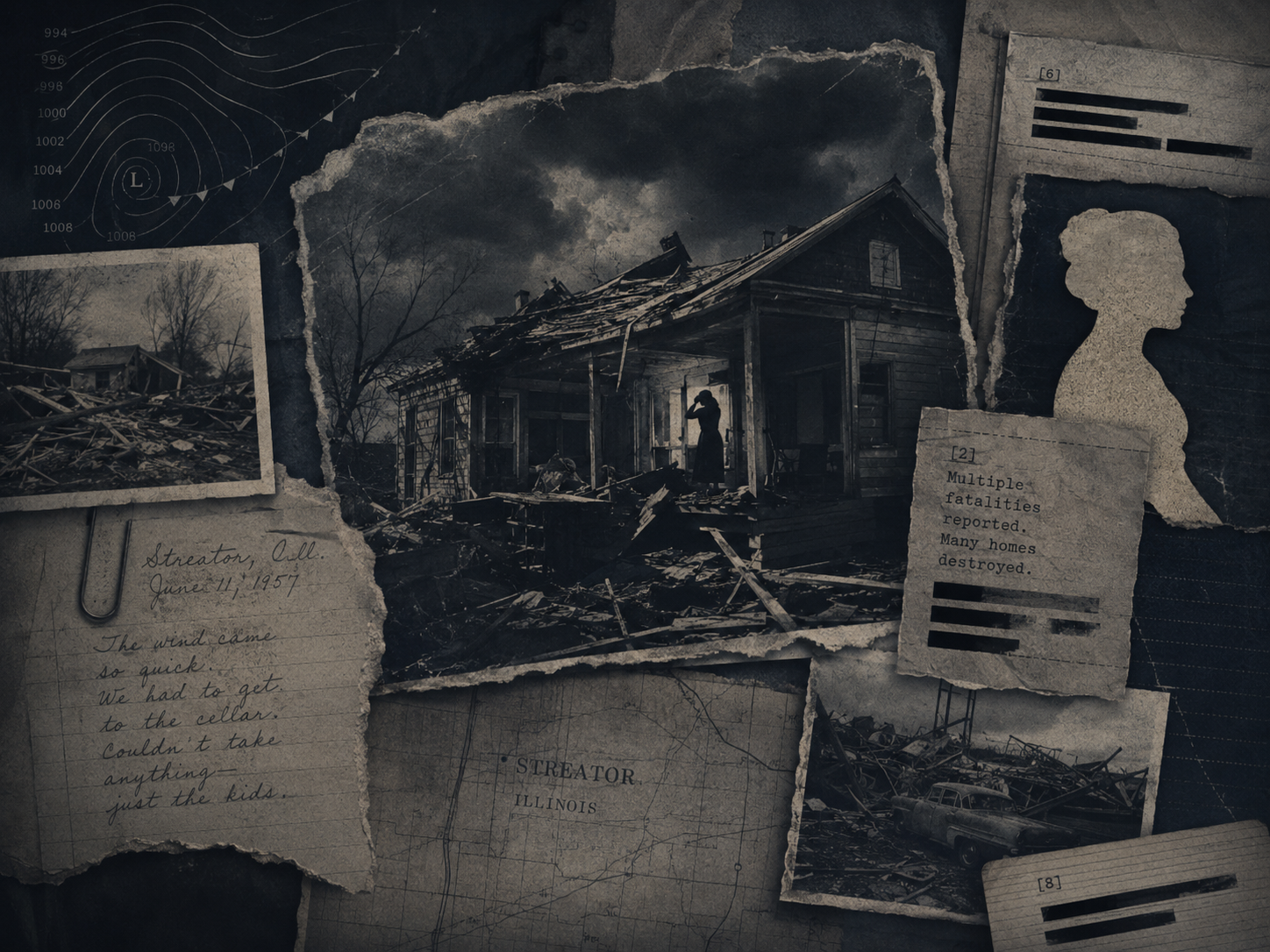
ENTRY
The Story Was Already There
A tornado destroyed a home in Streator, Illinois.
Inside were Gary and Roxanne Rymek.
The roof came down on both of them. Both were trapped. Both were injured. Gary, badly hurt, helped free Roxanne from the debris. Roxanne escaped, then tried to help free him. When she could not move the wreckage alone, she called for help.
A storm chaser heard her. Police and first responders came. Gary was pulled from the rubble. Both Gary and Roxanne were taken to the hospital.
That story was available.
It had the man who survived. It had the woman who survived. It had the storm chaser who helped. It had the first responders who finished the rescue. It had the collapsed house, the injuries, the terror, the call for help, and the chain of people who moved toward someone still trapped.
But that is not how it was written.
In much of the public frame, the story narrowed.
A man survived.
A storm chaser helped.
A woman screamed.
A wife appeared.
A good Samaritan was at the scene.
And then, in one of the clearest visual artifacts, Roxanne Rymek appeared on camera describing her own survival while the caption beneath her face pointed somewhere else:
In this part of the interview, she is describing the physical weight of the collapse on her own body. The lower-third does not name that experience. It points the viewer toward his survival.
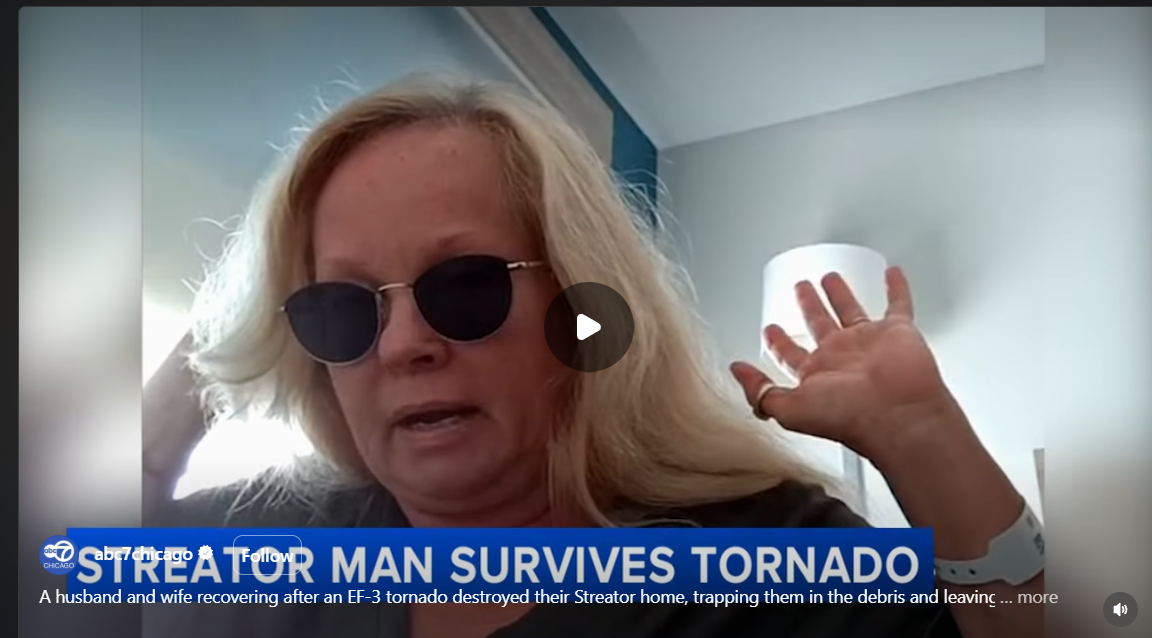
The sentence was not false.
It was too small.
TRACE LINE
Don’t Just Read the Headline
Read the chain.
Five words. One route through the file.
WORD IN THE FILE
Structural Reduction
Structural reduction is not the same as erasure.
Erasure means a person disappears from the record. Structural reduction is quieter. The person remains visible, but the story gives them a smaller role than the facts can hold.
CONTEXT FRAGMENT
The roof collapsed on both of them. The headline did not.
One house. Two survivors. One story that kept narrowing.
FILE DRAWERS
Open What Needs More Room
The impact stays visible. The longer evidence sits in drawers.
CAPTION The Frame Became Too Small Open the visual artifact
The most revealing artifact was not only what was said. It was what was placed beneath the woman saying it.
In the interview footage, Roxanne appears on camera describing the tornado and the collapse. Beneath her, the lower-third frame centered the story as a man’s survival.
That statement was not necessarily false. Gary did survive the tornado. He was trapped, badly injured, and rescued.
But the frame was smaller than the scene. The woman speaking above it had also survived. She had also been trapped. She had also been injured. She had also acted.
Captions teach viewers where to look. They tell the eye what the scene means before the viewer has time to sort the evidence.
CHAIN The Rescue Did Not Begin at the Camera Open the rescue sequence
The strongest version of this story does not diminish anyone else. Gary survived. Scott Lasker helped. Police and first responders completed the rescue. Those facts belong in the record.
Roxanne belongs in the chain too, and not as decoration.
| Step | What happened |
|---|---|
| 01 | Gary and Roxanne Rymek sheltered together as the tornado struck. |
| 02 | The roof collapsed onto both of them. |
| 03 | Gary, injured, helped free Roxanne. |
| 04 | Roxanne escaped injured from the wreckage. |
| 05 | Gary remained pinned beneath debris. |
| 06 | Roxanne tried to move the debris and called for help when she could not move it alone. |
| 07 | A storm chaser heard her, ran toward the home, and helped with the rescue. |
| 08 | First responders freed Gary, and both Gary and Roxanne were taken to the hospital. |
COVERAGE How the Story Narrowed Open the coverage drawer
Breaking news has gravity. Video dictates attention. A dramatic rescue pulls the frame toward the person still under the wreckage and the person rushing in to help.
That is understandable. It is also where the pattern begins.
Roxanne enters several versions of the story in partial forms: a woman screaming, the man’s wife, someone holding the camera, a good Samaritan at the scene. Each description contains some truth. Each one leaves something behind.
| Public frame | What it emphasized | What got smaller |
|---|---|---|
| Man rescued from collapsed home | The trapped man and the dramatic rescue. | The woman who survived the same collapse and called help toward the scene. |
| Storm chaser helps rescue man | The person who ran in and helped move debris. | The injured wife whose call brought help toward the wreckage. |
| Good Samaritan at the scene | A helpful figure near the rescue. | The fact that the “scene” was her destroyed home. |
| Couple survives tornado | The fuller frame: both people trapped, injured, and hospitalized. | This later version restores context that earlier frames narrowed. |
LANGUAGE Word Watch Open the language drawer
The pattern is small enough to hide inside ordinary language. That is what makes it useful to file.
| Word / Phrase | What it does |
|---|---|
| A woman | Removes the name and keeps the person as atmosphere, sound, or witness. |
| His wife | Identifies her through relationship before action. |
| She was OK | Can imply she was outside the central harm, even when the fuller account says she was trapped and injured too. |
| Good Samaritan at the scene | Suggests a helpful passerby. In this case, the described action appears connected to the injured wife who had just escaped the collapsed home. |
| Roxanne Rymek | Restores the named person, the survivor, the witness, and the actor to the same body. |
PATTERN CARD Visible, But Reduced Open the pattern drawer
A person can appear in the footage and still be assigned a smaller role than the facts can hold.
This file does not claim every outlet framed the story the same way. It follows a narrower pattern: what happens when the public story centers only part of the survival chain.
PATTERN AUDIT Questions Left in the Drawer Open the unanswered questions
Name
When does a person become named as herself instead of described through someone else?
Caption
What did the viewer learn before hearing the fuller account?
Action
Which actions became central, and which actions were treated as background?
Memory
Which version will be easiest to repeat after the breaking-news moment passes?
LANGUAGE CHECK What Can Be Said Safely Open the phrasing drawer
| Safe to Say | Avoid Saying |
|---|---|
| Roxanne Rymek was part of the documented survival and rescue chain. | Every outlet erased her. |
| The fuller frame included both Gary and Roxanne as trapped and injured. | The man’s rescue did not matter. |
| The public story often centered the trapped man, storm chaser, and rescue footage. | The coverage was malicious. |
| The pattern is structural reduction. | She was entirely absent from the record. |
FIELD NOTES
The Headline Did Not Have Room for Two
The file is not built by making the rescue less real. It is built by making the survival chain more complete.
Gary Rymek survived. Scott Lasker helped. First responders arrived. Roxanne Rymek survived too, acted too, called too, and became part of the record the headline could not fully hold.
The roof collapsed on both of them.
The headline did not.
SOURCE TRAIL
Sources and Further Reading
ABC7 Chicago, follow-up report naming Gary and Roxanne Rymek and describing both as trapped and injured.
Read the ABC7 Chicago follow-up
ABC7 Chicago, tornado damage coverage.
Read the ABC7 tornado damage report
National Weather Service Chicago, June 11, 2026 severe weather and tornado summary.
Read the NWS Chicago summary
CBS Chicago, initial rescue report centered on the trapped man and storm-chaser video journalist.
Read the CBS Chicago report
People, national human-interest version of the rescue story.
Read the People report
FOX 32 Chicago, photographer helps rescue man trapped under debris.
Read the FOX 32 report
NBC Chicago, brief rescue report with “good Samaritan at the scene” wording.
Read the NBC Chicago report
REFERENCE FILE
The Margin
This file belongs to The Margin: the place where The IT File tracks people who remain visible, but are moved to the edge of the public story.
Open The MarginCOMMENT PROMPT
Leave a Trace
What is a story where a person was visible, but the headline made them smaller?