THE LIVING ARCHIVE
THE IT FILE
No file sits alone
AGRICULTURE · BANKRUPTCY · FOOD SUPPLY · FAMILY FARMS
The Orchard That Couldn’t File Chapter 11
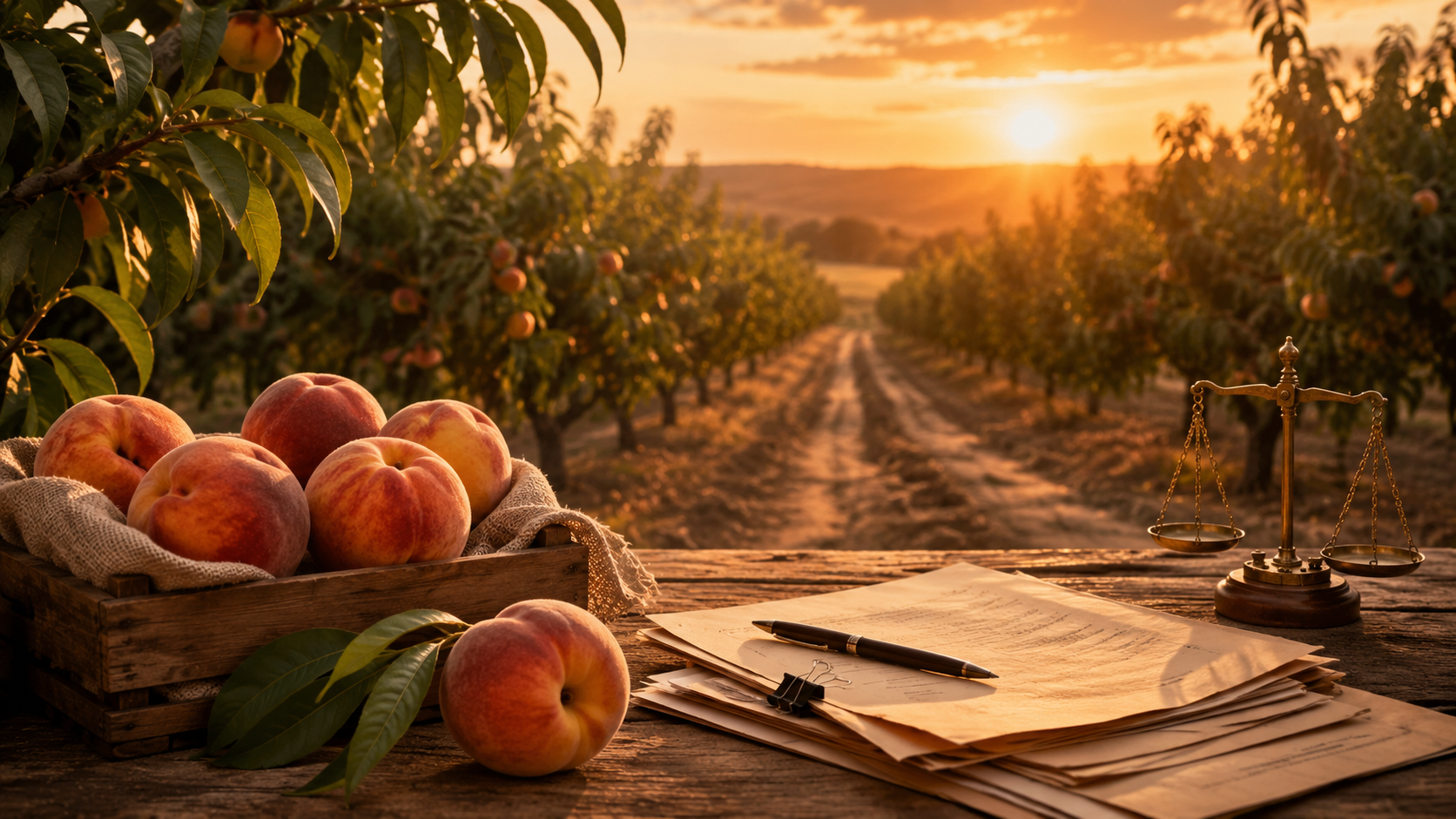
The peaches did not disappear.
The doorway did.
QUESTIONS IN THE FILE
Start with the question that opened the door.
QUICK ANSWER
Are Peaches Disappearing?
California peaches are not disappearing. But part of the domestic canned-peach system is breaking. The crisis centers on clingstone peaches, which are grown mainly for canning, freezing, and processed fruit products. After Del Monte Foods filed for Chapter 11 bankruptcy and rejected long-term grower contracts, some California growers were left with orchards planted for a processor that no longer had to buy the crop.
20 YEARS
A Paper Agreement Can Shape Land for a Generation
A cling-peach orchard may be planted around a processor contract lasting roughly as long as the productive life of the trees.
WHY CLINGSTONE?
Not a Grocery-Store Peach
Clingstone peaches are processing fruit. When a cannery closes, the orchard cannot simply pivot to the fresh-fruit aisle.
CONTINUING COVERAGE
Follow the Peach File
PATTERNS TO FOLLOW
Different Crops. Familiar Question.
These are not identical stories. They are nearby files about what remains when a major buyer or program disappears.
INITIAL EXTRACTION
What Happened?
Del Monte Foods filed for Chapter 11 bankruptcy on July 1, 2025, saying the process would allow it to strengthen its financial position and pursue a sale. The company announced $912.5 million in debtor-in-possession financing to support operations during the case.
For California peach growers, the bankruptcy reached far beyond a corporate balance sheet. Ag Alert reported that Del Monte rejected long-term contracts with members of the California Canning Peach Association under federal bankruptcy law. Some contracts had reportedly been signed in 2025 and were valid through 2044.
By spring 2026, reports said growers were preparing to remove about 420,000 clingstone peach trees, covering roughly 3,000 acres, after Del Monte cannery closures left growers with fewer routes to market.
Why clingstone peaches are different
A clingstone peach is not usually the peach someone bites into over the sink in July. It is a processing peach, bred and grown for canning or freezing. That matters because a farmer cannot easily redirect a field of cling peaches into the fresh-fruit aisle when a cannery closes.
The orchard was not just growing fruit. It was growing fruit for a specific system: contracts, processors, harvest windows, equipment, labor, cans, labels, buyers, and shelves.
THE HUMAN SIDE
The Orchard Moved at Tree Speed
The company story moved through court filings. The farm story moved through roots.
Ag Alert reported on Richard Lial, a third-generation San Joaquin County grower who tore out a productive almond orchard to plant 50 acres of peaches under an agreement with Del Monte. Lial said it took two years to clean up the old orchard and plant the new one. Then the contract was rejected through bankruptcy.
That is not just a business disruption. That is land changed. Time spent. A family farm standing in a field shaped by a promise that no longer had a buyer attached to it.
California Farm Bureau and California Canning Peach Association reporting quoted Sutter County grower Ranjit Davit saying the aid gave growers a chance to choose another commodity. Without it, he said, growers faced abandoned orchards and generational farming operations coming to an end.
CONTRACT LAYER
The Contract Was the Crop
In the California cling peach system, growers often plant orchards after securing long-term processor contracts. Ag Alert reported that growers typically plant cling peach orchards only after securing processor contracts lasting about 20 years, roughly the lifespan of the orchard.
A contract in this setting is not only a sales agreement. It can shape what gets planted, what gets removed, what loans look safe, what equipment is purchased, and what a family expects the land to do for the next generation.
That is why the timing matters. Some contracts were reportedly signed shortly before Del Monte sought to reject peach grower agreements in bankruptcy. That raises a public-interest question, not a verdict: what did growers know, what did the company know, and how much protection did the contract actually give the side that had to plant the trees?
OLD FILE · 2002: A San Joaquin Agricultural Law Review comment explored the collision between agricultural contracts, processor bankruptcy, liens, and the human consequences when a reliable buyer fails. OPEN THE LEGAL BACKGROUND →
The fruit did not fail. The route to market did.
ALL SIDES
The Company Side of the File
This file cannot only hold farmer pain. It also has to hold the company’s stated situation.
Del Monte entered bankruptcy saying the process would allow it to strengthen its financial position and pursue a sale. Reporting from major outlets described broader business pressures, including declining demand for some canned goods, grocery inflation, competition from cheaper private-label brands, higher input costs, debt pressure, and tariff-related pressure on steel used in cans.
That does not erase growers’ losses. It explains why the company sought an exit. The pattern lives in the mismatch: corporate debt can move through courts, but orchards move through seasons. That wider pattern is the reason this file belongs in the archive.
PATTERN UNDER REVIEW
The Vanishing Door
This file is not only about peaches. It is about what happens when local production depends on narrow access points.
A farm can own the land and still lose the route to market. A family can plant trees and still have no buyer. A crop can exist and still become economically stranded.
A system becomes efficient by removing extra doors.
Then one door closes.
Then abundance begins to look like waste.
No verdict entered. Evidence still arriving.
FIELD NOTES
What Remains in the Orchard
The peaches are still capable of growing. The land did not fail. The growers did not suddenly forget how to farm.
What failed was the route between the tree and the shelf.
The strongest thread in this file is not that one bankruptcy created every problem in the orchard. It is that the system had narrowed long before the filing arrived. Growers planted trees around long-term agreements. Orchards matured on agricultural time. Then the processor’s exit moved through court on corporate time.
Some details remain unresolved: the exact contract terms, the protections available to growers, the future of the stranded acreage, and how much domestic processing capacity will remain when the trees are gone.
But the larger pattern is already visible.
A food system can look efficient while the road is open. The real test begins when the road closes and there is no second door.
OPEN QUESTIONS STILL IN THE ORCHARD
OPEN FILE
Questions Still in the Orchard
These are not accusations. They are the questions still carrying real unknowns.
Contract Questions
- What termination rights did growers have if the processor could no longer buy the crop?
- Did the rejected agreements include exclusivity language?
- How many long-term contracts were signed shortly before the bankruptcy filing?
- What protections, if any, applied to orchards planted specifically because those contracts existed?
Conversion Questions
- How many growers removed other productive crops to plant cling peaches?
- How many younger orchards had not yet recovered their planting and maintenance costs?
- How much stranded acreage remains outside the current removal program?
- How much domestic processing capacity remains after the Modesto closure?
OPEN THE PEACH LEDGER
SIGNAL SHEET
The Numbers in the File
Some numbers are too large to behave like numbers. They become clues.
OPEN THE EARLIER WARNING
OLD FILE
The Warning Was Older Than the Bankruptcy
This did not begin with one bankruptcy filing.
In 2014, Ag Alert reported that California’s largest peach processors were offering 20-year contracts for cling peaches. The contracts were meant to encourage growers to plant after acreage had been shrinking and farmers had shifted toward crops such as almonds and walnuts.
A 2014 California Canning Peach Association review also noted that canners were offering long-term contracts and urged growers to get a letter of intent before planting.
That detail matters. The contract did not come after the tree. The contract came before the tree.
OPEN THE SOURCE TRAIL
SOURCE TRAIL
Sources and Reference Trail
Start with the public record. Follow the receipts.
BROWSE CONNECTED FILES
CONNECTED FILES
Follow Another Line
Different rooms. Recurring questions. No file sits alone.